Bedding • Safe sleep
Choosing an Organic Crib Sleep Surface: Fit, Firmness, and Material Questions
A crib mattress is a small landscape with a large job: it must fit the crib closely, provide a firm, level surface, and stand up to years of everyday use. Organic materials can be part of a thoughtful choice, but a label alone cannot answer every safety question. Here is how to compare the details that matter—from dimensions and firmness to components, certifications, and care.
Start with the sleep space, not the label
Choosing a crib mattress often begins with a search for a material or a claim: organic cotton, natural latex, chemical-free, low-emission. Those terms may point toward features a family values, but they do not establish whether a particular mattress is the right size for a particular crib. The first task is more practical. Identify the crib, confirm the manufacturer’s mattress requirements, and check that the proposed sleep surface is designed to fit it.
A mattress that seems close in size can still leave a hazardous gap at an edge or corner. Fit is not a decorative detail or a matter of a few centimeters of comfort; it is a core part of preparing a safe sleep space. Follow the crib and mattress manufacturers’ instructions, and use the specified mattress size and type. Do not rely on a topper, folded blanket, or improvised padding to make an ill-fitting mattress seem snug.
Caregivers may encounter a commonly repeated “two-finger” check for judging the gap between mattress and crib. It is not a substitute for the product’s instructions, applicable safety requirements, or a correctly matched mattress. If there is uncertainty about compatibility, contact the manufacturer before use. A crib mattress should lie flat and fit securely, without a pronounced gap along any side.
What a snug crib mattress fit means
Cribs and mattresses are manufactured to defined dimensions, but real-world compatibility still deserves attention. A standard-size crib mattress may not be interchangeable with every sleep product that looks similar, and a mini crib has different dimensions from a full-size crib. Read the crib’s manual and product label, then compare the required mattress dimensions with the mattress maker’s stated measurements.
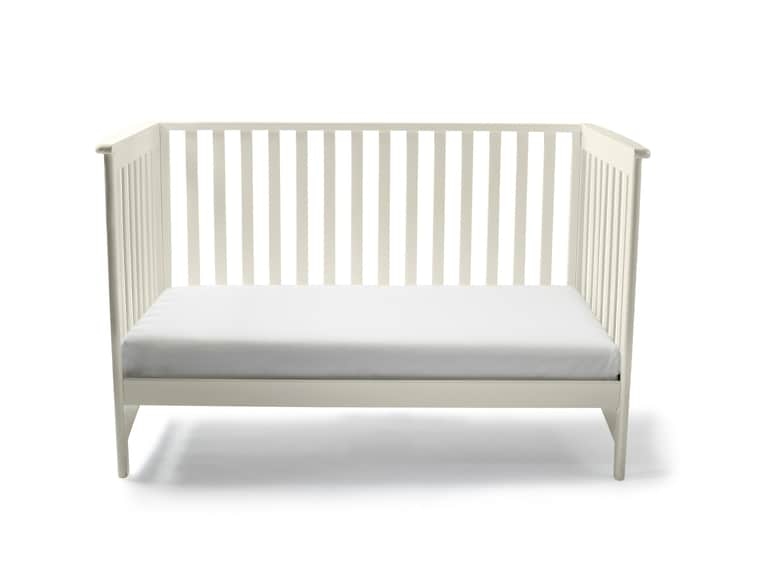
Check the fit after placing the mattress in the crib, not just by comparing numbers on a shopping page. The mattress should rest evenly on its support, with no corner lifting or bowing. Inspect the perimeter, including the corners, and confirm the mattress does not shift in a way that creates an opening. If the mattress is too small, too large, or does not sit level, stop and seek guidance from the manufacturer rather than trying to modify it.
It is also worth checking the crib itself. Assembly, hardware, and mattress-support settings affect the sleep space. Use the crib’s instructions, make sure all components are secure, and do not use a product that is damaged, altered, or missing required parts. A good mattress cannot compensate for an unsafe or improperly assembled crib.
Fit can change if a family changes the crib, adjusts its support platform, or buys a replacement mattress. Recheck compatibility whenever the setup changes. Keep the instructions and product information somewhere accessible; those documents can answer questions about dimensions, cleaning, and which accessories are approved for use.
Firmness is a safety feature, not a softness rating
For an infant’s sleep surface, firmness and levelness matter more than a plush, enveloping feel. A firm mattress resists indentation under the baby’s weight and returns to its shape. An adult mattress, pillow-top surface, soft topper, or extra cushioning is not a substitute for a crib mattress designed for infant sleep.
Words such as “supportive,” “comforting,” or “orthopedic” are not enough to establish suitability. Ask how the manufacturer describes firmness, what testing or requirements apply to the product, and whether it is specifically intended for the crib and age range in question. Avoid adding padded layers to change the feel. A fitted sheet designed for the mattress is the only bedding layer generally needed on the sleep surface; follow current safe-sleep guidance from trusted public-health authorities for the full sleep-space setup.
Some products are described as two-stage mattresses, with one side intended for an infant and another for a toddler. The existence of two sides does not mean both are appropriate for every child at every age. Read the maker’s instructions for identifying each side and the conditions for turning the mattress. Confirm that the crib’s configuration and the child’s developmental stage meet the product’s stated requirements. If the instructions are unclear, ask the manufacturer before changing the mattress orientation.
Firmness can be difficult to assess from a photograph or a brief product description. When possible, review the technical specifications and return policy before purchase. A showroom feel is not a replacement for safe-sleep requirements, and a parent’s preference for a softer adult bed should not determine the firmness chosen for an infant’s crib.
“Organic” is a materials question, not a complete safety verdict
Organic claims can refer to agricultural practices and to the processing or handling of a particular fiber. They do not automatically mean that every part of a mattress is organic, that the whole product has been independently certified, or that the item is suitable for every crib. A mattress is a layered object: cover fabric, filling, waterproofing, seams, adhesives, fasteners, and other components may each have different materials and treatments.
When a product is described as organic, ask what the claim covers. Is it the cotton in the cover, the batting inside, or the full textile assembly? Does the certification apply to the finished product, a specific material, or a facility? Are any layers made from synthetic materials? What provides moisture protection? How is the mattress designed to meet flammability requirements? Clear answers make it easier to understand what the label means—and what it does not mean.
Organic cotton, wool, latex, and other materials have different properties. Cotton can be used in a cover or filling; wool may be used for padding or other construction purposes; latex may appear in a core or layer. A product’s material list should identify which of these are present and where. Families should also consider known allergies or sensitivities and consult an appropriate health professional when they have questions specific to their child.
Be cautious with broad claims such as “chemical-free.” All physical materials are made of chemicals, and a slogan alone does not identify ingredients or testing. More useful information includes a complete materials disclosure, the purpose of each layer, applicable test results, and the name and scope of any independent certification. Transparency is more informative than a sweeping promise.
How to read certifications and test claims
Certifications can help make a complicated supply chain easier to understand, but the scope matters. Some programs assess organic fiber production or textile processing; others focus on chemical restrictions, emissions, or a defined product category. A logo is only a starting point. Look for the certifier’s name, the current certificate or listing, the product or material covered, and any limitations stated by the program.
For example, a textile certification may apply to cotton fabric without covering every non-textile part of the mattress. A certification for a raw material does not necessarily certify the finished mattress. Likewise, a test report may describe one sample, one set of conditions, or a particular emissions measure. Ask whether the report is recent, who performed the test, what was tested, and whether the result applies to the model being considered.
Useful questions for a seller or manufacturer include:
- Which components are certified, and which are not covered?
- Can the certification be verified through the certifier’s public directory or documentation?
- What materials make up the cover, core, filling, waterproof layer, and seams?
- Are chemical finishes, adhesives, or flame-retardant treatments used? If so, what are they?
- What testing supports emissions or chemical-safety statements, and who conducted it?
- What safety standards apply to this crib mattress, and where can the documentation be reviewed?
These questions are not an invitation to assume that an unfamiliar ingredient is dangerous. They help distinguish a specific, verifiable disclosure from a vague marketing phrase. They also make comparisons fairer: two products may both use “organic” in their descriptions while applying the term to different components.
Waterproofing, cleaning, and everyday use
Babies make messes, so care instructions are part of the selection decision. A mattress may have a waterproof surface, a removable cover, or instructions for spot cleaning only. These designs can affect how quickly the surface can be cleaned and whether the mattress can dry fully. Read the care label before purchase rather than assuming that a removable-looking cover is washable or that the entire mattress can be immersed.
Moisture management is important for keeping bedding clean, but the method should be manufacturer-approved. Do not add an unapproved pad, thick protector, or extra layer if it changes the fit or firmness of the sleep surface. If a protector is recommended or permitted, confirm that it is the correct size and designed for the mattress. A fitted sheet should stay secure and should not bunch or loosen.
Follow the manufacturer’s directions after spills or cleaning. Allow any cleaned surface to dry as instructed before use, and do not use solvents, fragrances, or cleaning treatments unless the maker says they are appropriate. Keep the mattress in good condition and inspect it periodically for damage, sagging, exposed filling, broken seams, or a surface that no longer lies flat. A damaged product may need to be replaced.
When considering a used mattress, learn its history if possible. Check for damage, persistent odors, moisture exposure, and compatibility with the crib. A secondhand mattress that appears clean may still be the wrong size or may have an unknown history. If any required safety information is missing or the product’s condition is uncertain, choose a mattress whose specifications and condition can be verified.
A product example: what to examine in a listing
The Naturepedic Lightweight Organic Cotton Crib Mattress is listed as a crib mattress made with organic cotton and a waterproof surface, with a stated size of approximately 27¼ by 51⅝ by 6 inches for standard-size cribs. Its product information describes a polyethylene waterproof surface and a naturally derived fire-protection system. The listing also describes a lightweight version and a two-stage option, so buyers should confirm which configuration they are selecting and read the instructions for that exact model.
Those details offer a useful illustration of how to assess a listing, not a substitute for independent evaluation or a recommendation that one mattress will suit every crib. Verify the exact measurements against the crib manual, check the current product documentation and applicable certifications, and confirm the manufacturer’s cleaning and use instructions. If a product page uses broad safety language, look for the underlying specifications and supporting documents.
For any brand, details can change over time. A current model may differ from an earlier version in construction, dimensions, or certification status. Keep the product name, model number, and documentation together, especially if you are comparing listings or arranging a return.
Prepare the whole sleep space
A well-chosen crib mattress is one piece of a safe sleep environment. Current guidance from organizations such as the American Academy of Pediatrics and public-health agencies emphasizes placing babies on their backs for sleep and using a firm, flat, non-inclined sleep surface with a fitted sheet. The crib should be kept free of loose bedding and soft objects, including pillows, quilts, comforters, and stuffed toys. Follow the latest guidance from your local health authority and your child’s clinician, particularly when medical circumstances call for individualized advice.
Do not use positioners, wedges, or inclined products unless a qualified clinician has advised you in a specific medical context and the product is permitted under current guidance. A mattress should not be raised or tilted as a home remedy. If a baby has breathing, reflux, allergy, or other health concerns, ask the clinician for advice rather than changing the sleep surface on your own.
Caregivers can make the process easier by preparing the crib before the baby arrives: assemble it according to its manual, confirm the mattress fits and lies flat, put on one properly fitted sheet, and keep extra blankets and soft items elsewhere. A simple, uncluttered sleep space is easier to inspect and maintain.
A practical crib mattress checklist
Before buying, use a short list to separate must-haves from preferences. The goal is not to identify a perfect material in the abstract; it is to choose a well-documented product that fits the actual crib and supports the intended use.
- Confirm compatibility: Check the crib’s manual for the required mattress type and dimensions.
- Verify the fit: Make sure the mattress lies level and snugly in the crib, including at the corners.
- Prioritize firmness: Choose a firm, flat surface intended for infant sleep; do not add softness with extra padding.
- Read the full material list: Look beyond the cover to the core, filling, waterproof layer, seams, and finishes.
- Check certification scope: Find out exactly which material or product component a certification covers.
- Ask about testing: Seek specific information about applicable standards, test methods, and the model tested.
- Understand care: Follow cleaning directions and confirm whether a protector or other accessory is permitted.
- Review condition and documentation: Keep receipts, model details, warranties, and instructions; inspect for damage.
- Use current safe-sleep guidance: Keep the sleep surface clear and follow advice from trusted health authorities.
Choose clarity over certainty claims
The word “organic” can describe a meaningful farming or processing standard, yet it cannot answer every question about a crib mattress. A family comparing organic crib mattresses will learn more from a transparent breakdown of components, dimensions, firmness, certification scope, and care than from a slogan about purity or safety. The same is true when evaluating a conventional product: clear specifications matter more than assumptions based on a single material name.
Begin with the crib’s requirements. Confirm a snug fit and a firm, level surface. Then compare the mattress materials and any certifications with care, asking what each claim covers and where the evidence can be verified. Finally, prepare the sleep space according to current safe-sleep guidance. This sequence keeps the decision grounded in essentials while leaving room for families to weigh their own material preferences.
In a nursery, the most reassuring choice is rarely the one with the loudest promise. It is the one whose dimensions, construction, and instructions are clear—and whose fit can be checked against the crib standing quietly in the room.